10% this winter season 26/27: Code: LYON10 - Expires 23 October 2026
Destinations
Airport

Describe the practical requirement rather than writing only “accessible transfer”. Include:
whether the passenger can transfer from a wheelchair into a vehicle seat;
whether a wheelchair is manual, folding or powered;
the folded dimensions and weight of mobility equipment;
whether a powered chair has a battery and what type;
how many steps the passenger can manage;
whether assistance is needed at the airport or only at the vehicle;
any service animal, medical equipment or extra luggage;
the exact resort address and any known access restrictions.
Do not send confidential medical history that the team does not need. Explain the support required to complete the journey safely.
| Part of the journey | Information we need | Confirmation to obtain |
|---|---|---|
| Boarding | Can the passenger use steps and transfer to a vehicle seat? Is hands-on help needed? | A boarding arrangement suitable for the passenger and proposed vehicle. |
| Equipment | Packed or folded dimensions, weight and whether it can be dismantled | Enough space and a workable loading arrangement. |
| Airport handover | The assistance point or exit and the lead contact | Where airport assistance meets the transfer arrangement. |
| Resort access | Full property address, path, steps and any restricted road | A practical drop-off and plan for any final local journey. |
| Return collection | How the passenger will reach the stop with equipment | A return arrangement that still works in the expected conditions. |
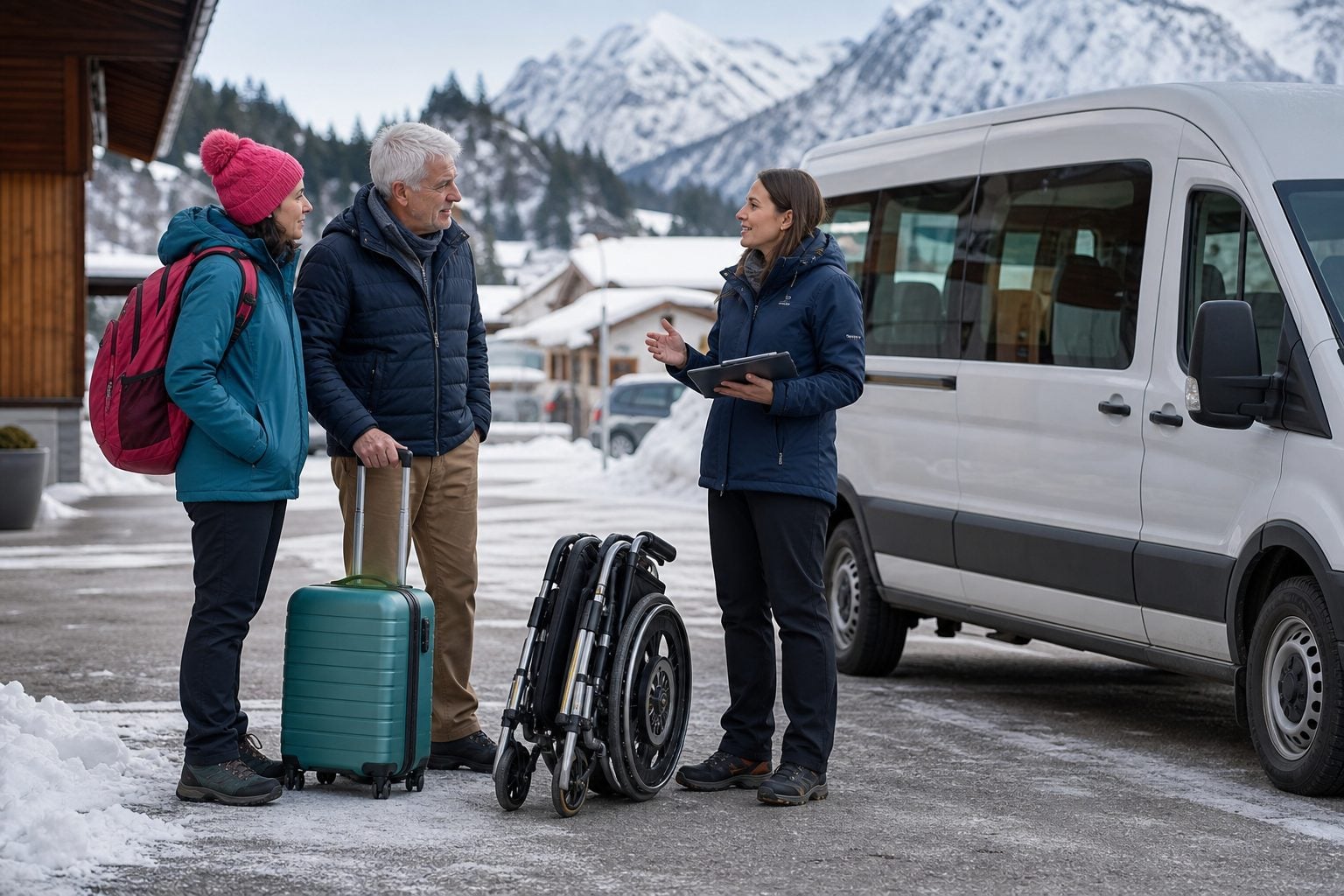
A folding wheelchair and a powered chair can require very different vehicle arrangements. Please do not book on the assumption that “minibus” identifies the available equipment or boarding method. Send the practical requirements so we can check a specific partner-operated service.
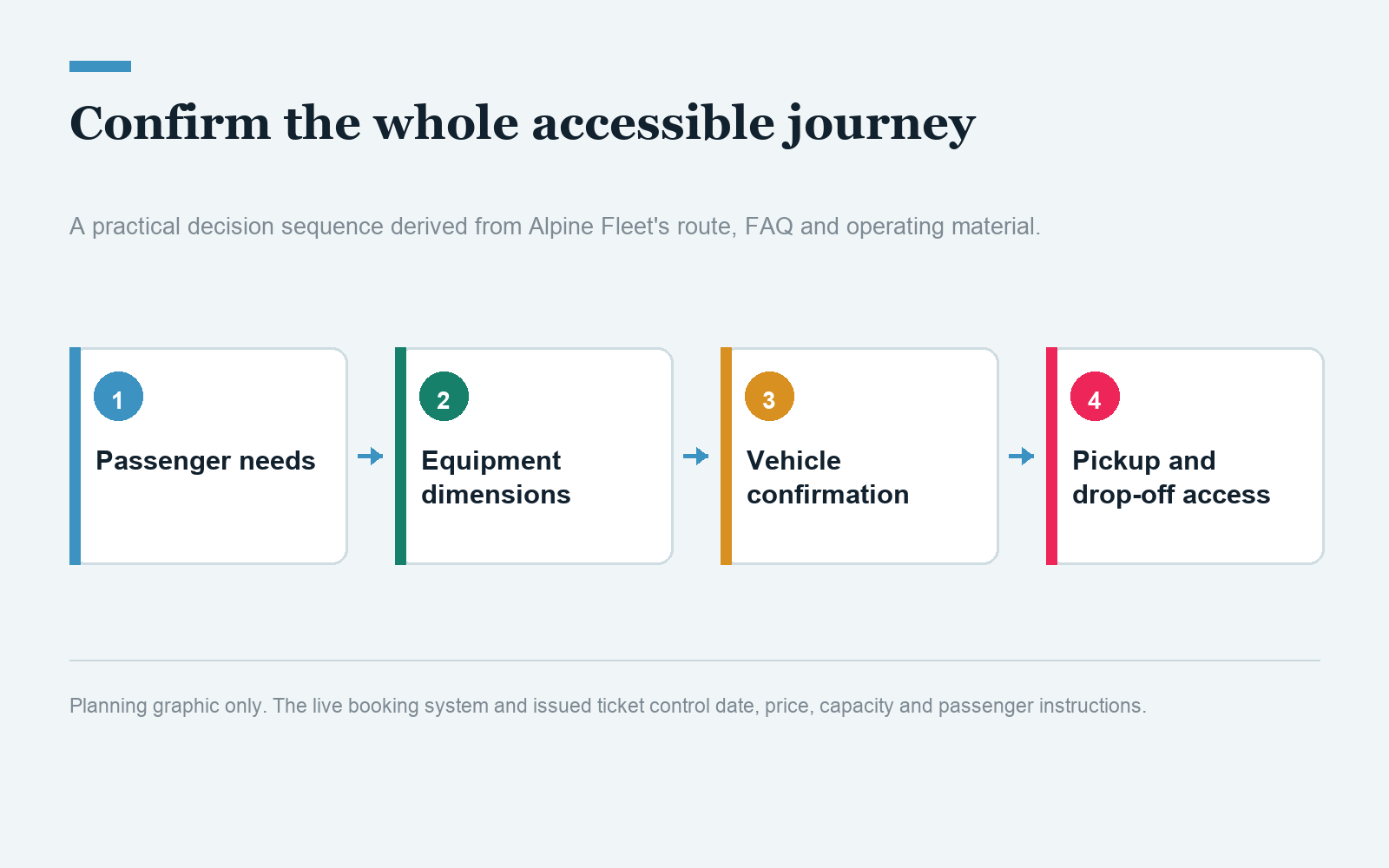
Before paying, confirm:
the proposed vehicle can carry the passenger and equipment;
boarding height and transfer arrangements are suitable;
the driver has been told about the requirement;
the pickup and drop-off points are accessible;
any additional space or vehicle charge is shown;
the plan still works if a large coach cannot reach the accommodation.
An ordinary minibus should not be assumed to have a ramp, lift or wheelchair restraint system. We arrange transport through partner operators, so the vehicle and handling plan need to be confirmed for your journey.
Assistance inside the terminal is normally arranged with the airline or airport. Tell the airline by its deadline and confirm where airport assistance ends and the transfer meeting process begins.
If airport staff will bring the passenger to a particular exit or assistance point, share that detail with us before travel.
Pedestrianised resorts, steep streets, snow-covered paths and coach restrictions can affect the last part of the journey. Ask how far the agreed stop is from the accommodation and whether a local shuttle, snow taxi or other connection is required.
Include your airport, travel dates, flight details, passenger count and full resort address. Then describe what the passenger can do independently, what assistance is needed and how the equipment packs for transport. This is more useful than a diagnosis alone and avoids sharing medical history that is not needed to plan the transfer.
If assistance is needed at a particular stage—such as getting from a wheelchair to the seat or carrying equipment between an airport exit and the vehicle—name that stage explicitly. Ask us to confirm what can be provided and what must be arranged separately. A request entered in a comments box is not confirmation that specialist equipment is available.
For a pedestrian resort, include the final local connection in the request. An appropriate airport vehicle does not by itself establish that a snowy footpath, gondola or local shuttle is suitable for the passenger.
Keep the booking reference and operations contact accessible. Contact the team if assistance takes longer than expected, equipment is damaged or the airport changes the agreed exit point.
An accessible arrival does not automatically validate the return. Pickup may occur in darkness, in snow or at an alternative resort stop. Confirm how the passenger will reach that point with luggage and who should be contacted if conditions change.
Contact us if the airline changes the arrival point, the passenger’s mobility changes or equipment is replaced. Send the new practical details rather than relying on the original note. If equipment is damaged or missing at baggage reclaim, also report it to the airline and tell our team before leaving the terminal.
Keep the written transfer confirmation with the lead passenger and share the relevant details with any companion travelling on the return. If an updated stop cannot be reached safely, tell us immediately so the available options can be checked; do not attempt an unsuitable path simply to reach the original pickup.
No. The request must be checked and confirmed against an available partner-operated vehicle.
Yes, with dimensions and weight. It affects capacity even when the passenger can transfer to a standard seat.
Contact us promptly and obtain revised written confirmation; a vehicle that suited the original information may not suit the new requirement.